How to Play Blackjack: Rules and Gameplay
Blackjack is one of the most popular casino card games in the world. The rules are simple to learn, yet the game leaves room for real decisions. This page explains how a round of blackjack works, from the first bet to the final payout.
The goal of the game
You play against the dealer, not against the other players. The aim is to finish with a hand closer to 21 than the dealer's, without going over. If your hand goes over 21, you bust and lose immediately.
Card values
- Number cards 2 to 10: worth their face value.
- Jack, queen and king: worth 10.
- Ace: worth 1 or 11, whichever is better for the hand.
A hand with an ace counted as 11 is called a soft hand, for example ace-6 is soft 17. If the ace must count as 1, the hand is hard.
How a round works
- You place your bet in the betting circle.
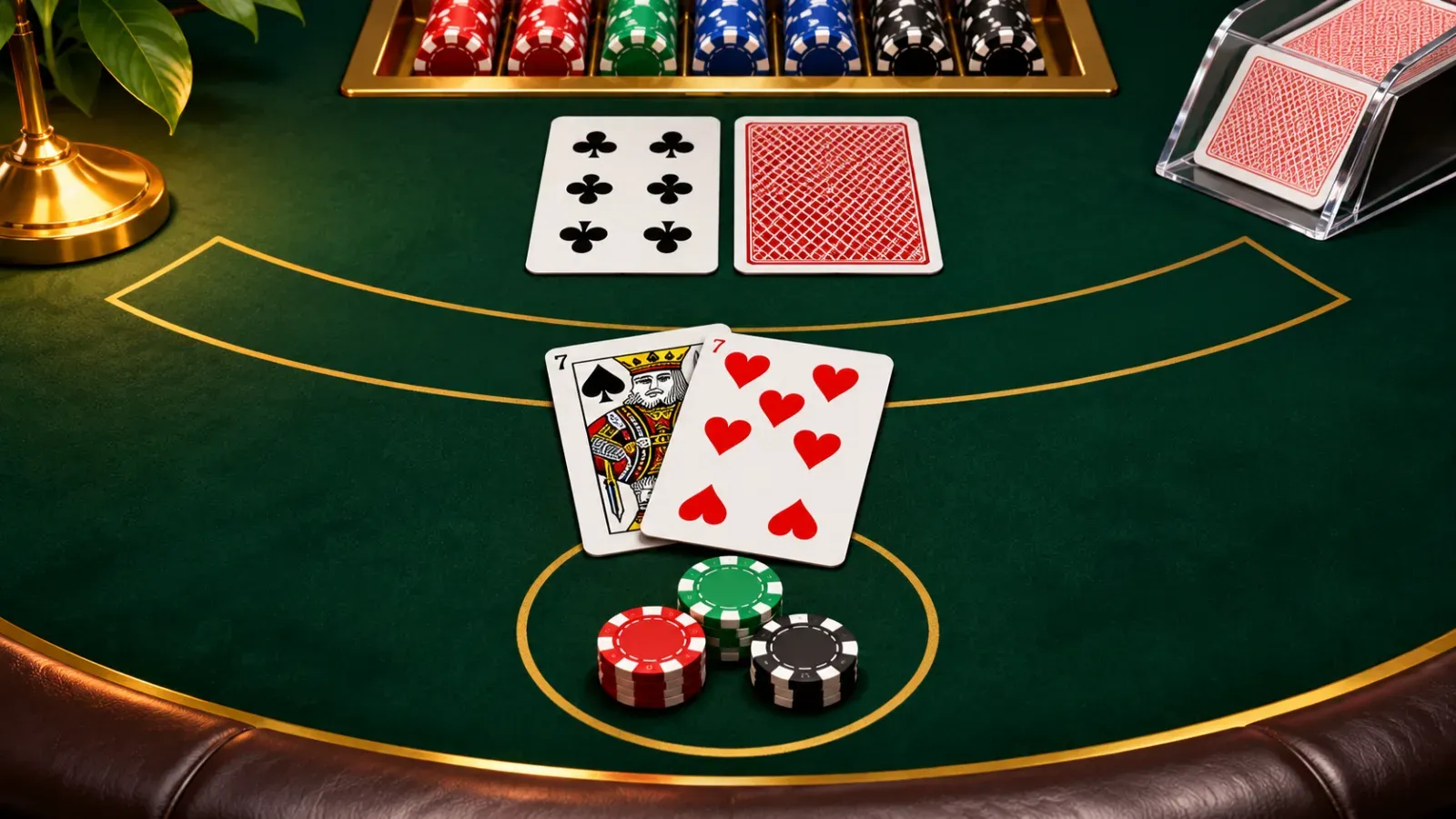
- The dealer gives each player two cards face up and takes two cards, one face up (the upcard) and one face down.
- If you have an ace and a ten-value card, you have a blackjack, the best hand in the game.
- Players act in turn. You choose to hit (take a card) or stand (keep your hand). Other options are explained below.
- When all players have finished, the dealer reveals the hidden card and draws according to fixed rules.
- Hands are compared and bets are settled.
Your options
- Hit: take another card.
- Stand: keep your current total.
- Double down: double your bet and receive exactly one more card.
- Split: if your first two cards have the same value, split them into two separate hands with an extra bet.
- Surrender: at some tables, give up half your bet and end the hand.
When to use each option is explained on our page about basic strategy.
How the dealer plays
The dealer has no choices. In most games, the dealer must hit until reaching 17 or more. At some tables the dealer also hits on soft 17. This small rule makes a difference to the odds, as explained in our guide to blackjack variants.
Payouts
- A winning hand pays 1 to 1.
- A natural blackjack traditionally pays 3 to 2. Some tables pay only 6 to 5, which is worse for the player.
- If you and the dealer have the same total, it is a push and your bet is returned.
Play responsibly
Blackjack is a game of chance with a house edge. Set a budget before you play and stick to it. Gambling is for adults (18+) only.
An example round
You place a bet of 10 and receive a 10 and a 6, a total of 16. The dealer shows a 9. Basic strategy says you should hit, because the dealer has a strong upcard and 16 is unlikely to win if you stand. You draw a 4 and reach 20. You stand. The dealer turns over a 7, giving 16, and must draw. The dealer draws a king and busts with 26. You win 10. If the dealer had drawn a 4 instead, reaching 20, the hand would have been a push and your stake returned.
Doubling down
When you double down, you double your original bet and receive exactly one more card. This is a strong move when your total is 10 or 11 and the dealer shows a weaker card, because there is a good chance of reaching a high total. Some tables only allow doubling on certain totals, so check the rules. Doubling at the right moments is one of the main ways players reduce the house edge.
Splitting pairs
If your first two cards have the same value, you can split them into two separate hands, placing a second bet equal to the first. Each hand is then played separately. Splitting aces and eights is almost always recommended, while splitting tens or fives is almost never a good idea. The best decisions depend on the dealer’s upcard; see blackjack basic strategy.
Surrender
Some tables offer surrender: after seeing your first two cards, you can give up the hand and get half your bet back. It sounds defeatist, but in certain situations, such as a hard 16 against a dealer’s 10, it loses less on average than playing the hand. Not all tables allow it, and the exact rules differ.
Table rules that matter
- Blackjack payout: 3:2 is standard; 6:5 tables are much worse for the player.
- Dealer on soft 17: standing on soft 17 is better for the player than hitting.
- Number of decks: fewer decks are generally slightly better for the player.
- Doubling and splitting rules: more freedom is better for the player.
- Surrender: having the option is an advantage.
Etiquette at the table
At a physical or live table, a few customs apply. Use hand signals in land-based casinos so cameras can record your decisions clearly, do not touch your chips once the round has started, and let the dealer handle the cards. Online, the interface takes care of this, but a calm pace and clear decisions still make the game more enjoyable.
Once you know the basics, the next step is learning the optimal decisions. A practical chart is explained in how to use a blackjack basic strategy chart.
Frequently asked questions
How much is an ace worth in blackjack?
An ace counts as 1 or 11, whichever gives the better hand.
What happens if I tie with the dealer?
It is a push: your bet is returned and nobody wins.
Does the dealer have to hit on 16?
Yes. In most games the dealer must hit until reaching at least 17.