Common Blackjack Mistakes and How to Avoid Them
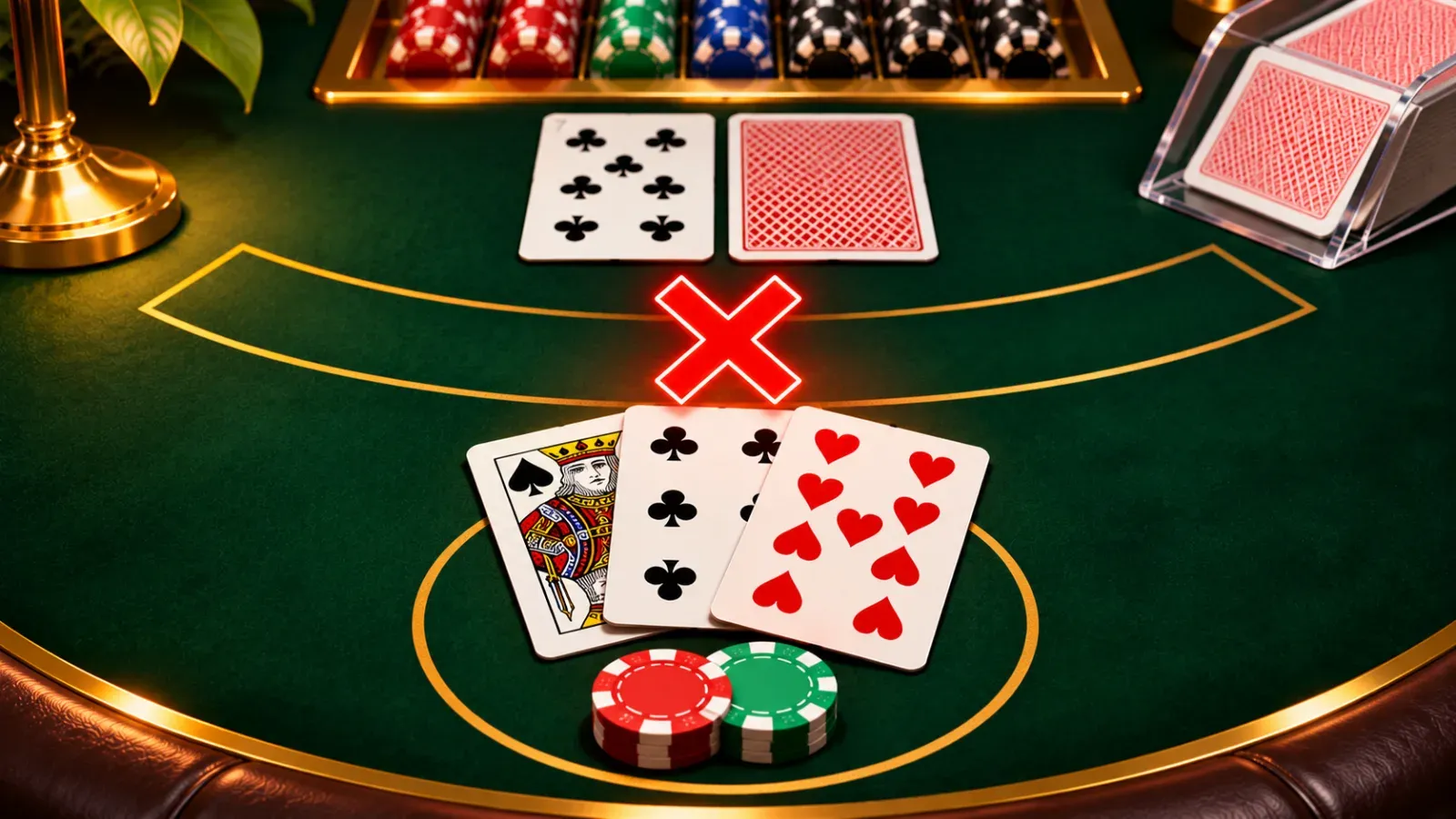
Blackjack is easy to learn, but many players lose more than necessary because of avoidable mistakes. Some are strategic errors at the table, others are about how players manage their money and time. This page lists the most common ones.
Strategy mistakes
- Playing on gut feeling: decisions based on hunches cost money over time. Use basic strategy instead.
- Never busting: some players always stand on 12 to 16 because they are afraid to bust. Against a strong dealer card, that usually loses more often than hitting.
- Not doubling enough: doubling on 10 or 11 against a weak dealer card is one of the best opportunities in the game. Many players miss it.
- Splitting tens: twenty is a very strong hand. Splitting it gives away a likely win.
- Not splitting eights: sixteen is the weakest hand; two hands starting with 8 are better.
- Taking insurance: for most players, insurance is a poor bet, as explained in blackjack side bets.
Table choice mistakes
- Playing 6:5 blackjack: a 6 to 5 payout for blackjack significantly increases the house edge. Look for 3 to 2.
- Ignoring the rules: whether the dealer hits soft 17, and whether you can double after splitting, affects your odds. Learn more in our guide to blackjack variants.
Money and mindset mistakes
- Chasing losses: raising your bets to win back what you lost usually makes losses bigger.
- Betting systems: systems that double your bet after every loss do not change the house edge and can empty your budget quickly.
- Believing in streaks: each hand is independent in most games. A run of losses does not mean a win is due.
- Playing too long: fatigue leads to mistakes. Set a time limit.
- Drinking while playing: it lowers concentration and makes bigger bets more likely.
A simple checklist
- Choose a table with good rules.
- Use basic strategy.
- Skip insurance and keep side bets small or avoid them.
- Set a budget and a time limit before you start.
- Stop when you reach either limit.
Blackjack should be entertainment. If it stops being fun, take a break. Gambling is for adults (18+) only.
Playing too fast
Online blackjack can be played very quickly, especially in digital versions where a hand takes only seconds. Playing fast increases the number of hands per hour, which increases the total amount wagered and therefore the expected cost. It also leads to more mistakes, because you have less time to think. Slowing down and taking a moment for each decision is one of the easiest improvements you can make.
Ignoring the table rules
Many players sit down at a table without checking the rules. A 6:5 payout for blackjack, a dealer who hits soft 17 or restrictions on doubling can all increase the house edge significantly. Two tables that look identical can offer very different odds. A minute spent reading the rules can save a lot of money over time; see blackjack variants.
Believing in streaks
After several losses in a row, some players feel that a win must be coming and raise their bets. Others feel they are on a hot streak after a few wins and bet more. In digital blackjack, especially with continuous shuffling, each hand is independent of the previous one. Streaks are simply what randomness looks like. Adjusting your bets based on them does not change the odds.
Using betting systems
Systems such as the Martingale, where you double your bet after every loss, promise a guaranteed profit. In reality, they only change how wins and losses are distributed. A long losing streak, which happens more often than people expect, can quickly lead to very large bets and table limits being reached. No betting system overcomes the house edge. Managing your money sensibly is explained in blackjack common mistakes and bankroll management.
Playing tired or distracted
Blackjack requires attention. Playing late at night, after drinking alcohol or while doing other things increases the chance of mistakes. Even a few wrong decisions per hour can noticeably increase your losses. Play when you are alert and can focus on the game.
Taking insurance automatically
When the dealer shows an ace, many players take insurance out of habit, especially when holding a good hand. In most situations this is a losing bet in the long run. The same applies to taking even money when you have blackjack. It feels like protecting a win, but mathematically it is usually worse than playing the hand out. Read why in blackjack side bets.
Not keeping track
Many players have only a vague idea of how much they have spent over a month. Without a record, it is easy to underestimate losses and overestimate wins. Keeping a simple log of sessions, with the amount you started with and the amount you ended with, gives a clear and honest picture. It also helps you spot patterns, such as playing longer after losses.
Avoiding these mistakes does not turn blackjack into a winning game, but it does make sure you get the best possible odds and keep your play enjoyable. Combine correct strategy with good table choice and clear limits, and you will be ahead of most players at the table. A practical starting point is how to use a blackjack basic strategy chart.
Frequently asked questions
What is the biggest beginner mistake in blackjack?
Playing on gut feeling instead of following basic strategy, closely followed by taking insurance.
Should I always stand on 12 to avoid busting?
No. Against a dealer 7 or higher, hitting 12 is usually the better choice.
Do betting systems help in blackjack?
No. They change how much you bet, not the odds of the game.